MOOCs
In 2012, the New York Times called massive open online courses (MOOCs) a “revolution that has higher education gasping.” That article, “The Year of the MOOC,” included interviews with the founders of MOOCs providers who predicted that these free courses would shake up higher education.
Several different for-profit companies emerged to lead in this space. edX, however, was a not-for-profit consortium of universities led by Harvard University and the Massachusetts Institute of Technology that focused on establishing a platform that could provide large-scale open online education.
At the same time, Georgetown was developing its own response to the trend. “We don’t know where this train is going,” Georgetown President John DeGioia said, “but we know we want to be on it when it gets there.”
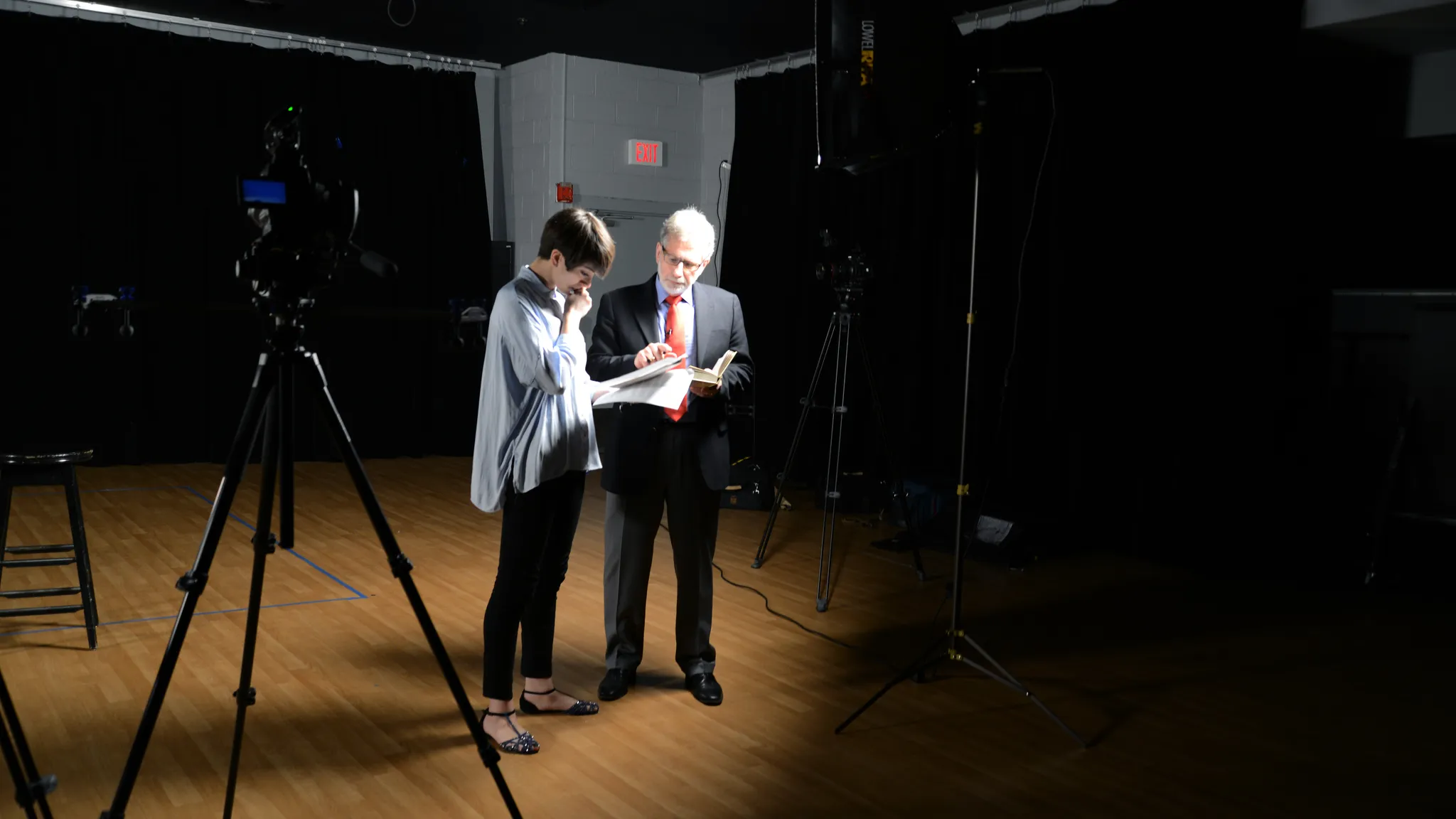
Georgetown joined the edX consortium as part of the Initiative on TechnologyEnhanced Learning, and CNDLS was facilitating that partnership every step of the way. In order to respond to the moment, we had to build capacity and establish new ways of working in teams to support large-scale projects. The CNDLS approach to MOOCs was to highlight what made Georgetown education unique. We focused on an integrative learning design encouraging multiple perspectives addressing a particular domain. For example, the Terrorism and Counterterrorism MOOC had contributions from nine faculty led by Professor Dan Byman.
Georgetown also strengthened its relationship with other institutions during this time. In 2015, we hosted the fifth edX Global Forum. More than 360 edX partner members from across the world attended. It felt like a real community. In conjunction with the edX conference, CNDLS hosted a fiveday internal workshop, GeorgetownX Institute, on the learning design process for MOOCs.
Since the beginning of our partnership with edX in 2012, CNDLS has worked on 27 MOOCs in total. During the 2024–25 academic year, active GeorgetownX courses engaged 431,093 learners, with 10,121 overall verified enrollments in our MOOCs, underscoring the breadth and impact of our open online learning initiatives.
While many of the predictions about MOOCs never materialized, our response to that inflection point has made a lasting impact on the organization. MOOCs required CNDLS to strengthen our organizational capacity to adapt, experiment, and collaborate with one another and across the university. These skills would prove vital, as an ever bigger disrupter that would force all learning to go online would hit the world less than a decade later.
COVID-19
When we look back at the overarching timeline of CNDLS, March 2020 was a moment where the often theoretical work of instructional continuity suddenly became the daily reality for the entire university.
In February 2020, our instructional continuity plans were largely designed for brief disruptions, like winter weather or the occasional facilities issue. But as the global situation shifted, we realized our mission was about to change effectively overnight. We had to pivot from being a center for innovation and scholarship to becoming the operational backbone for a universitywide transition to remote learning.
The scale of this undertaking was unlike anything we had attempted before. In a typical summer, we might work with a few hundred faculty members. By the end of the summer of 2020, we had engaged with more than 1,800 unique faculty. We moved our consultations to Zoom, transformed our website into a central hub for emergency resources, and launched a series of webinars covering everything from recording lectures to grading in Canvas. We knew that many faculty were unfamiliar with teaching online, and it was our job to prioritize clarity and remove barriers to entry.
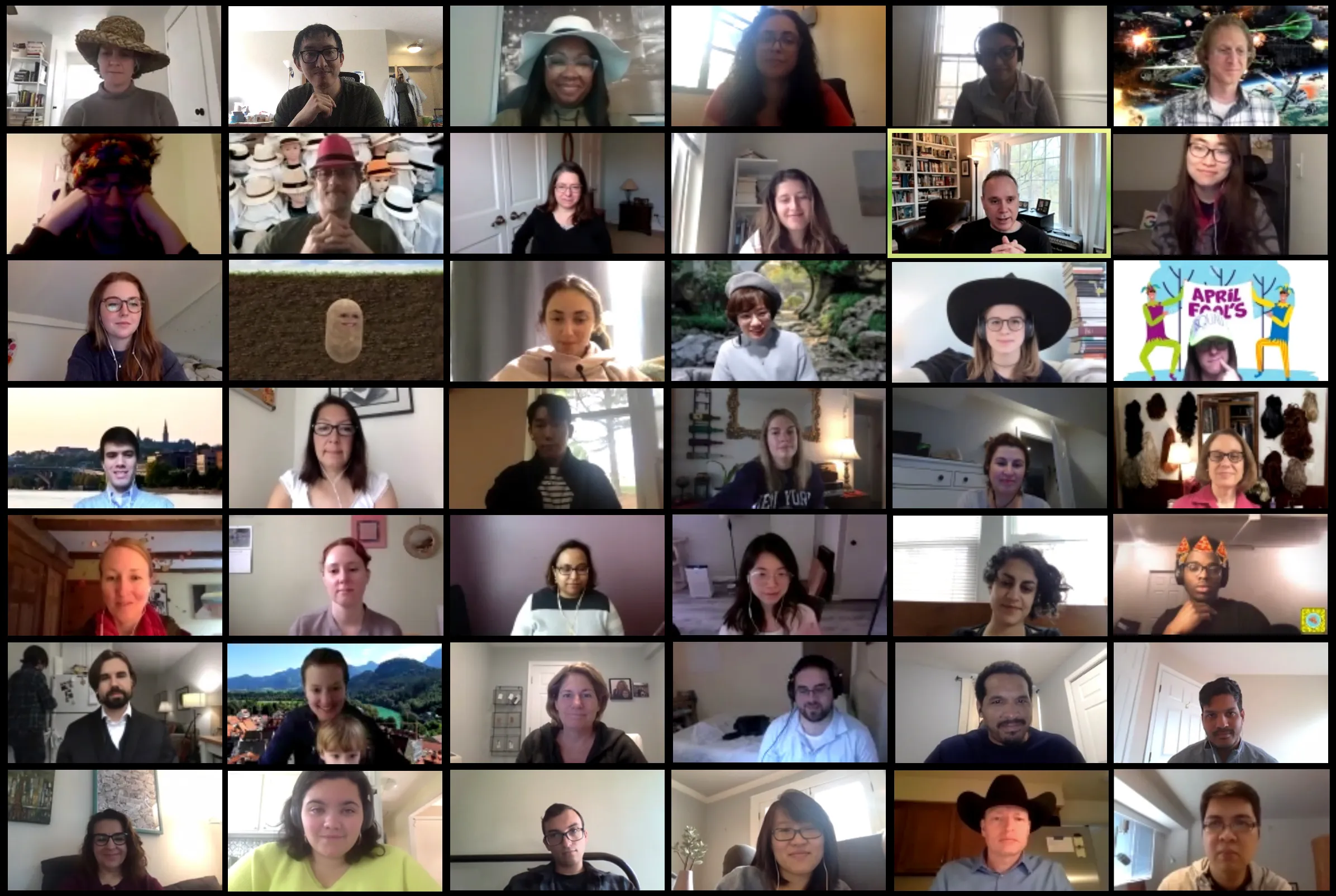
The centerpiece of this operational pivot was the Course Design Institute (CDI). Simply teaching the mechanics of Zoom wouldn’t be enough to preserve the Georgetown ethos. We needed to help faculty create a “signature Georgetown experience” in a digital space. This goal meant designing a curriculum focused not just on tools, but on cura personalis (the Jesuit principle that means “care for the whole person”), community-based learning, and authentic assessment. We encouraged faculty to “adapt, not translate,” and to reimagine their courses rather than simply lecturing into a webcam.
We certainly didn’t do this alone. Faced with the challenge of running 67 distinct faculty cohorts with a relatively small staff, we leaned into our values and turned to our students. We integrated students as true partners in the process, inviting them to serve as panelists, co-designers, and facilitators. This partnership allowed us to keep the student perspective front and center, reminding us all that our learners were navigating grief, isolation, and new responsibilities alongside their coursework. We also supported (and eventually adopted into CNDLS) a pilot program of undergraduate instructional technology aides, comprising 150 federal work study students who supported faculty directly in their remote classrooms and later in person when they returned to campus and faced new hybrid-enabled classrooms.
When we returned to campus in 2021, the lessons of the pandemic remained. We carried forward a new emphasis on flexibility, inclusive pedagogy, and the importance of acknowledging the whole person. We learned that resilience is about the willingness to experiment, iterate, and support one another through uncertainty.
Looking back, we are incredibly proud of how our community responded. We built bridges between students and faculty that hadn’t existed before and we proved that even when we are apart, we can still learn and grow together. As colleagues wrote about this time period, “things are different now”…but we are stronger for it.
AI
If the pandemic taught us how to pivot, the arrival of generative artificial intelligence (AI) taught us how to pause, question, and explore. When tools like ChatGPT first emerged, the initial reaction across higher education was a mix of fascination and apprehension. At Georgetown, we haven’t shied away from that uncertainty. Instead, we did what we do best: we gathered the community to talk about it.
Our journey began in earnest with forums like the joint Main Campus Executive Faculty-CNDLS session on Feb. 9, 2023, where we first asked the big questions: How does this change assignment design? What does this mean for academic integrity? In those early days, our framework was simple yet grounding: regulate, adapt, integrate. We helped faculty determine when to draw lines, how to “AI-proof” assignments, and consider with caution where to let these new tools in.
But as the technology evolved, so did our approach. We realized that “managing” AI wasn’t enough; we needed to build literacy and fluency. We moved from reactive town halls to proactive, hands-on experimentation.
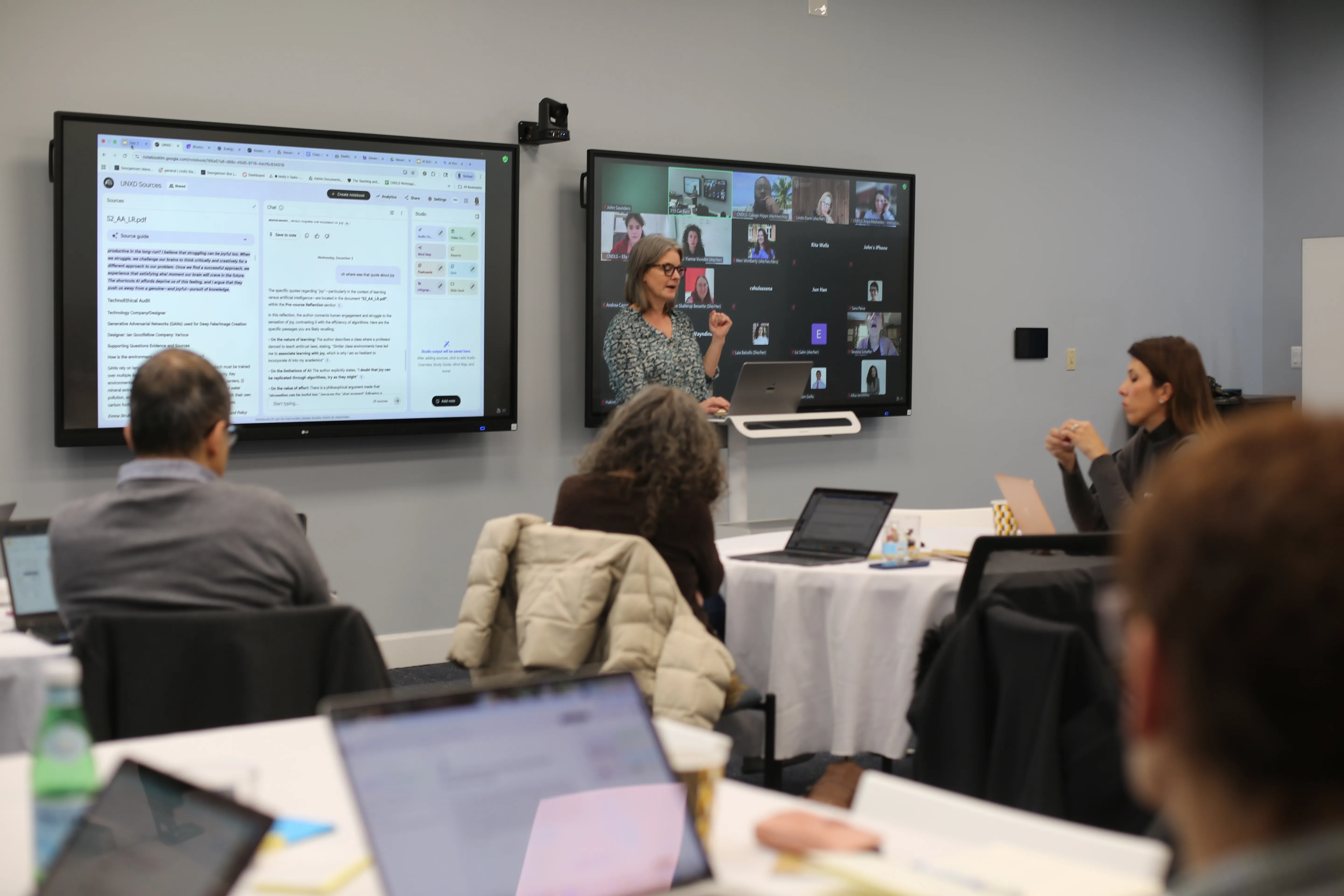
This shift gave rise to our AI Workshop Series and AI Bootcamps. Through these experiences, we offered faculty the basics of understanding and working with large language models and provided a friendly sandbox in which to play. They needed a low-stakes environment to “break” the tools, to see where they hallucinated, and to discover where they could actually deepen or hinder student learning. Throughout the 2024–25 academic year, we facilitated monthly workshops focused on play and experimentation to help demystify how students are using the tools and how faculty might, including image generation for the visual arts to debate simulations in a philosophy classroom. All the while, we have maintained a key focus, per our Jesuit identity, on the ethics of AI in research.
The scale of engagement and our metrics reflect a university in deep inquiry. Perhaps of greatest impact, we’ve worked intimately with specific units, from the School of Nursing to the English Department and the School of Foreign Service. Each time, we tailor our support to the unique disciplinary challenges they face. In the Fall 2025 semester alone, we collaborated with 22 departments and units, supported 44 events, including 30 individually tailored workshops, and attracted participants from more than 130 Georgetown units across all offerings.
Fall 2023–Spring 2025 AI Activities

Cross-Campus Impact
170+ events, workshops, and presentations around AI , with boutique sessions for 30+ departments, reaching participats from 150+ units.
Self-paced microcredential
As of April 22, 2026, 918 people have enrolled in the course; 491 of which are currently active students and 74 have earned digital badges of completion.

Bootcamp attendance
Hosted 295 unique attendees across three bootcamps in 2025.
What started as a conversation about the potential impact of a mysterious new technology has blossomed into a robust curriculum on pedagogical innovation. Our recent bootcamps were designed to prime faculty to reimagine the classroom. Together, we explore how AI can act as a tutor, a creative partner, or a formidable debater to sharpen critical thinking.
Recognizing that artificial intelligence is fundamentally reshaping writing, research, and professional practice, we launched the CNDLS AI Lab in the fall of 2025 to act as a dedicated partner in navigating AI in higher education. We knew early on that a onesize-fits-all approach wouldn’t work; the impact of AI on the School of Nursing is vastly different from its impact on the Department of History. That’s why the lab is designed as a reflective, non-prescriptive space where departments can explore these shifts in their own unique contexts. Through a flexible process, we partner with programs to build a custom pathway focused on three core areas: building literacy and fluency, reimagining pedagogy for authentic assessment, and mapping the long-term impact on curriculum. By moving beyond simple tool training to deep, communal reflection, we are helping faculty design rigorous learning experiences that strengthen—rather than replace—the human skills our students need most.
Our core message remains unchanged. As we noted in our earliest forums, AI tools shouldn’t create full replacements of student or faculty work. The goal isn’t to replace the human element of education, but to refine it and allow it to adapt. By building AI fluency, we hope to support Georgetown faculty to lead the conversation on what it means to teach and learn in an AI-augmented world.
We are still learning, and the landscape changes daily. But looking at the hundreds of colleagues who have joined us in labs, bootcamps, and consultations, one thing is clear: we are facing this new frontier together, with curiosity and a commitment to our students’ future.